Saturday, February 14, 2015

Dickens and Poe


Edgar A. Poe 2 by Tackycat


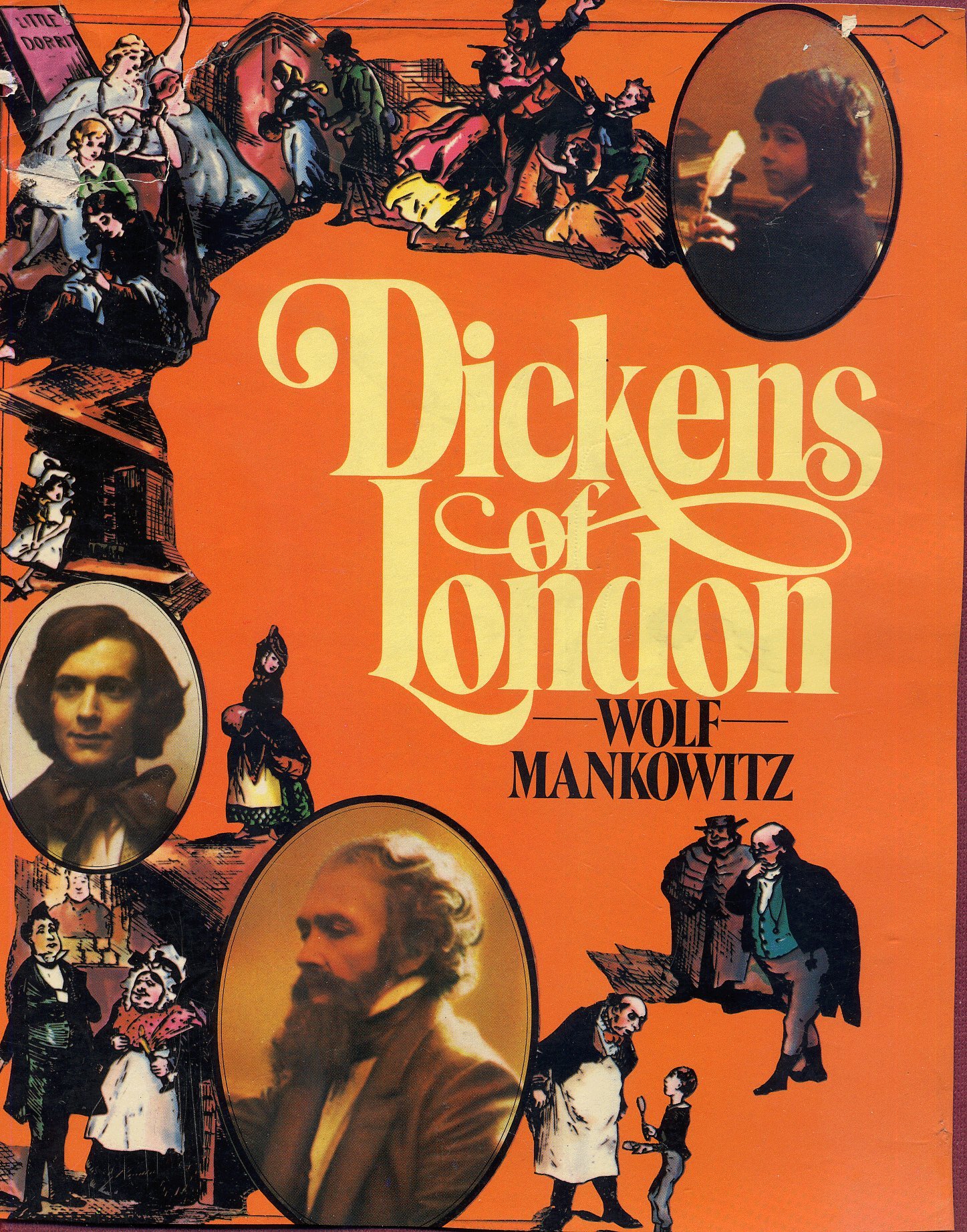
The 1976 BBC Masterpiece Theatre production Dickens of London, was on while I was still a small child, and I was unaware of it until as a young adult, I came across overage of it in a book chronicling the Masterpiece Theatre productions. It wasn't until the early 2000s that I actually got a copy, after it had been re-released in the US on DVD.


      As I anticipated, it is an excellent production, with separate actors protraying the author as a boy, a young man, and (both) a middle-aged man, and an old man. The film faithfully follows the life of Dickens from his boyhood to his deathbed. There was another biographical portrait of Dickens broadcast sometime this new century on PBS, which I taped. There were actors portraying Dickens parents and contemporaries in that as well (including Timothy West as Dickens father), but that was not a straightforward dramatazation of the author's life. This version is. The life of Dickens dramatized, making the film seem like the life of one of Dickens characters, and could stand alongside the adventures of David Copperfield, Oliver Twist or Phillip Pirrip. Only this boy really lived and some of what he endured was the equal of the hadships his fictional characters went through. There seem to be less evil adults here than in his novels (though I suspect that there were in young Charles' life), but young bullies are well represented. The actor who protrays the elder Dickens makes him a jovial, flamboyant merry-maker, and relentless optimist. That's probaly fairly close to reality, as Dickens claims to have based David Coppperfield's Mr. Mcawber on his father. The incidents of Charles' family ending up in depter's prison, and the Blacking Factory are well-presented. There's plenty of darkness in this, including a harrowing scene in which two accost young Charles in Warren's Blacking Factory and pour boiling shoe polish on him. The later incidents of Charles' affair with a young actress, and the accident on the train are not included here, BTW.

The episodes flash back and forward from the author's boyhood and youth to his elder years. There are some disconcerting incodents, including one with a man who is made up to resemble Mr. Pickwick, barges in to Dickens' sickbed to have word with the auhtor, and the doctor throughs him out. The elderly author reflects, "Am I dreaming of him, or is he dreaming of me?"

    This scene and others beg the question as to how much of all this is faithful to the author's life and how much is fictionalized. And this brings me to the point of this essay, which happens to be Dickens and Poe, what I set to write out in the first place. Later in the serial, there is an episode titled "Nightmare," which is clearly based on the real-life incident in which Dickens met with Edgar Allen Poe in America.
    
 Dickens of London

    This occurred during Dickens first tour of the continental US, which would shrotly inspire him to write Martin Cuzzlewit(not his most popular work, particularly not with Americans). Both authors knew and  admired one another's work by this time. Poe reportedly urged Dickens to find a Birtish publisher for his Tales of Grotesque and Arabesque. Dickens promised he would, but was apparently unable to do so. Did Dickens fudge on his promise? Probably he did his best to find a publisher, but one wonders if the outcome of his meeting with Poe could have been influenced by the bizarre incident in "Nightmare"--if it occurred at all, that is.

   In the film, Poe lets Dickens in on a secret of his: he had discovered a way to find out what lies beyond the grave. Poe tells Dickens that he has been experimenting with hynosis, and has managed to drug a man into a hypnotic state at the moment of his death, so that his consciousness (spirit), is in a suspended state, caught between the world of the living and the dead. Naturally, Dickens is intrigued by this (remember, Dickens was an amateur magician himself, and also experimented with hypnosis--not to mention he was reputed to have been a member of London's "Ghost Club"), and he accompanies Poe to the house where the man in question is sprawled out on a bed in a darkned room. Poe demands that the man tell them what lies beyond this world, whereupon he pulls back the linen covers. The body, which has been in suspended "life for 7 months, collapses into a dired skeleton. Horrified, Dickens flees, with Poe's vampirish laughter ringing in his ears.

     Any truth to this? And if so, is it a trick devised by Poe or a real-life paranormal incident?


Wednesday, February 11, 2015

Nicholas Nickleby (1980)


  I recieved the entire set of Nicholas Nickleby the Christmas before last. It was on old VHS tapes, not DVDS. It's been ages since I've actually read the novel. It has been even longer than that since I've seen some of this adaptation, possibly the most celebrated one ever of Dickens' third novel. It was put on by the Royal Shakespeare company back in the eighties.

    I remember when this was telvised in 1982, on ABC, I think. I was in ninth grade at the time. My English teacher had us read Great Expections that year, the first time I'd had to read a lengthy Dickens novel. I remember her assigning extra credit to anyone who would watch the Nicholas Nickleby serial and do a special report on it. I saw just a bit of it, and it seemed very dark, but that's the way Dickens' adaptations often are. What I most remember though, is my mom absolutely hating it, due mostly to the darkness, and some of the violence going on. However, we didn't really see enough to make any judgement of the series as whole, especially considering it's length.


     Now that I've finally watched it from beginning to end (and knowing the story), I can safely say that it lives up to all the hype it recieved back then. While some Dickens adaptations of the time cut corners and leave out imprtant characters and events, that is certainly not the case. It's all here--Nicholas's confronation with the sadistic Wackford Squeers, the Cheeryble Brothers, the Vile Mulberry Hawk, Smike's tragic death, the horrible realization that prompts Ralph Nickleby's suicide, everything. The scene in which Nicholas thrashes Squeers is memorable, and appears especially orchastrated here to have the audience cheering.
 

    The approach this adaptation employs here is a bit unorthodox, or at least it seems so for as a film adaptation. Before each subsequent act, the performers give monologues to the audience in regard to the events. Thus, we get the sensation of the people on stage transforming from actor to character, and back again. As a film, this can be a bit disconcerting, but the adaptation does manage to work both as a film and a play. This is literally a film of the play (caught live on camera it spooled out on the London stage).  And though the sets change throughout the performance, they are convincing enough to work on film, as though shot in the gloom-shrouded steeets of Victorian London--well, nearly. The atmosphere in this production is indeed quite dark, as it should be, and we don't see too much that would reveal itself as stagey during the actual scenes.

 Image result for a Christmas Carol Fred

    On a final note, actor Roger Rees, who has the title role, also played Scrooge's nephew Fred 1984's A Christmas Carol. He's who I always pictured as Nicholas, thanks to this performance--in spite of the fact that I'd not the seen but very little of the performance before now.

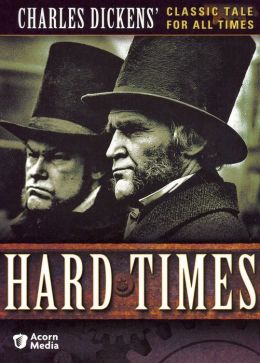
Hard Times (1977)


I just recently got to purchase and view the 1977 adaptation of Hard Times. I remember reading the original novel back in college. It was for a course in Victorian literature. As a rule, most college courses tended to avoid the longer works by authors, given the time allowed in a semester, and that rules out virtually all of Dickens. Hard Times, however is a realtively slim novel. It is basically a scalding comentary on the rise of industrialization at the time, in particular the small, industrial towns that were popping up in the north of England over the past few decades. The novel is to be beleived, these industrialized "progressive" villages were dominated by crushing uniformy, terrible working conditions, and mass exploitation of impoverished laborers. The story takes place in fictional Coketown, and centers around the ruthlessly materialistic schoolmaster Thomas Gradgrind, who discourages all flights of "fancy" in his pupils, and his friend, the blustering, "self-made man" Josiah Bounderby, who is later revealed to be a fraud. It is a satire on extreme ultalitarinism, which Gradgrind pounds into his students, and imposes upon his own children. Part of the tragedy of the tale is that Gradgrind, at least, seems to be well-meaning in this, and seems to realize his error after the damage has taken effect.

     Back when I first read this, I pictured Bounderby as looking like Mr. Bumble from Oliver Twist--in fact, like Timothy West's portrayl of the character in 1982.  So it seems pretty appropriate here that he is actually played by Timothy West,  And so he is. It's almost as though he's playing the same character. He's so gross and hypocritical, its quite a relief when he finally gets what's coming to him.

     Also in this version, the city of Coketown is itself very well portrayed. With smoke stacks belching forth vile chemicals, it very much resmebles the city in the book. We didn't really see any of the city itself in the more recent adaptation by the BBC, as I recall, although I would recomend the DVD of that as well, in part becuase that version also includes a short film of Dickens' often anthologized ghost story "The Signal Man" as an added bonus. Bitzer, Gradgrind star pupil, is protrayed as a very pale albino boy in the 1977 version, unlike in the BBC version, but the same as in the novel. This is important, as Bitzer's paleness was a metaphor for the bland "colorless" school of thought Gradgrind imposed on his students.

Where is "The Haunted Man"?


Charles Dickens' novella, The Haunted Man and The Ghost's Bargain presents an enigma in that it has not been adapted so much as once as a screen or even a known stage production since the nineteenth century. That's right---Dickens' ghostly tale of a gloomy chemistry teacher named Redlaw, haunted by wrongs done to him in the past, who encounters his ghostly double on Christmas eve has yet even to be filmed. Contrast that with the story of Scrooge, with more adaptations on screen and stage (not to mention parodies, animated, and sticom version, etc) than any other Dickens work bar none. Mention the name "Scrooge", and anyone will know the character. It would be very difficult ot find someone familiar with Redlaw's tale.

     The species of phantom Redlaw encounters, a duplicate of himself, is known to folklore as a "fetch". The phantom doppleganger is staple in paranormal literature. One also features in Edgar Allen Poe's short story "William Wilson."

    Dickens' Haunted Man was the last of his Christmas stories, which he began publishing annually following A Christmas Carol's roaring success, the previous ones being The Chimes, The Cricket on the Hearth, adn the Battle For Life. Of these, only The Chimes was another ghost story, about phantoms that haunt the bell tower, though it took place on New Year's Eve rather than Christmas. The protagonist of The Haunted Man, which, like Carol, occurs on Christmas proper, is so morbid about past wrongs (I think there's many who can relate to him), that he accepts the phantom's offer to obliberate all his unpleasant memories. The phantom's "gift," has unforseen consequences, as Redlaw becomes unable to express a loving nature--be becomes merely bitter and quarrelsome. Worse, his affliction spreads to others around him. The loving Swidger family and Tetterby family become...not so nice. It is only an innocent child character, Milly Swidger, who, because she remains uneffected by the affliction, is able to save Redlaw. the chemist recounts his bargain with the ghost, and all is restored to right and good by the end. The message hear, delivered in the final line by Milly Swidger, is that even painful memories of our past must be preserved in order for love and joy to exist in the present. That message, and the story itself, did not manage to resonate nearly as deeply with the collective human psyche as A Christmas Carol did. Still, the story seems to have been fairly popular on the stage following its publication. The story also includes a heavy dose of social criticsim of the times, just as in Carol and Chimes: at one point Redlaw encounters a half-wild "beast child," a sort of equivelent of Carol's Ignorance and Want.
 
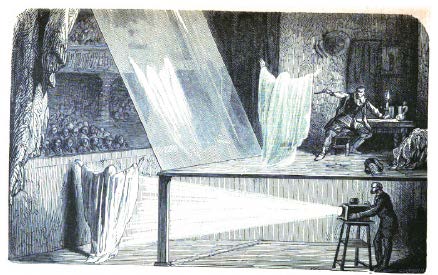
     The reasons for its utter disapearance following the Victorian era remain unclear. Fred Guida, in his book A Christmas Carol and its Adaptations, relates that records show that one of the early stage adaptations featured a "flying ghost" onstage, and a later one was the first presentation of the "Pepper's Ghost" effect, very innovative for the time, in which the ghostly image of a human actor was projected onto the stage via a light projector, and through a pane of glass situated between the stage and audience. The effect was pioneered by polytechnic Henry Dirks, and presented on the stage by another polytechnic, John Henry Pepper, hence the name.

 https://skullsinthestars.files.wordpress.com/2012/08/peppersghost.jpg


Whatever the reason, dispite its early popularity, it's obvious by now that the story of Scrooge managed to totally eclipse that of Redlaw. I think it's time The Haunted Man was given its due on screen. Come to think of it George C. Scott might well have made a formidable Redlaw just as he did Scrooge. Scott was very good at depicting complex, conflicted characters in his movies. It's a pity he's no loger with us.

Here is an illustration of the fetch from the story:


 And some interesting illustrations for The Chimes:


Friday, October 10, 2014

Dickens and Shared Universe Fiction


Shared universe fiction, a modern term, refers to fiction that takes in a universe in which characters from different stories can meet and interact. Thus, the characters are members of a single "universe" or fictional reality, which is generally assumed to be separate from the "real world." Doubtless, this term (and the term 'aternate reality") did not exist during the 19th century. "Alternate history" seems to have had its origins with Joan Aiken's The Wolves of Willoughby Chase , the first of her "wolves chronicles," a series of YA books that were themselves Dickensian, set in an alternate 19th century, in which an underground channel was built between Britain and the continent, through which ravening wolves re-entered England and menace the English countryside. There is apparnetly even an alternate form of cockney spoken there, in which the word "naffy" roughly tranlates to the modern American slang "cool."

Dickens, of course, did not knowingly set out to create such fiction. But, in a sense, all fiction is alternative in that the characters and incidents did not occurr in reality--at least, not the reality we know. In regard to the concept of a "shared universe," that has to even more recent. Exactly when I can't say, but examples of it abound nowadays, the most extreme example being The League of Extraordinary Gentlemen comics (and film adaptation), in which all the fiction up through the early twentieth, as well as chacters of folklore and myth, happen to be real and historical. On a related note, author Stephen King, at some point in the career of his enormous body of fiction, decided to set most of his fiction in the same universe--read closely, and you'll references scattered throughout his work, at least later in his career, to his other novels. I said "most" because King scholars (and King himself) technically consider his work to comprise a vast "multiverse," set across innumerable realities, with the Dark Tower series and world being the central linch pin. Even without the Dark Tower, setting King's fiction in a "multiverse" would be a necessity, given that the futures explored in two of his Bachman books (The Long Walk and The Running Man)take place in very different dystopian futures, not to mention the post-apocolyptic world of The Stand, which never happened in his slew of recent books. Other authors, such as horror writer Brian Keene, have followed suit with King, and have connected their novels and characters as well.

But back to Dickens. In all of his canonical novels, there is not one verifiable incident where a character from one work crosses paths with another. Pastiches, however, are another matter. I've often speculated, for instance, on how a character like Jack Dawkins might cross paths with Abel Magwitch--after all, both were sent to Australia. An interesting subject for a pastiche, though I've actually found with all the Dodger pastiches out there, that someone's alread done that:

http://www.amazon.com/gp/product/1909609439/ref=x_gr_w_bb?ie=UTF8&tag=httpwwwgoodco-20&linkCode=as2&camp=1789&creative=9325&creativeASIN=190960943


So, then, it's suggested that least two of Dickens' works take place in the same reality. And with the subject of Dodger's adventures in Australia is on the table, I'd like cvall attention to Escape of the Artful Dodger, a Tv mini-series actaully produced in Australia. It, too, takes place in a shared universe, as is evident when both Mr. Micawber and Uriah Heep (from David Copperfield) turn up. The series also has Fagin escape the gallows, the same approach taken by The Further Adventures of Oliver Twist, another mini-series pastiche movie shown in Britain back in 1981. Escape also has the Dodger crossing paths briefly with a man who appears to be a young Charles Dickens.

That's another thing that pastiche sometimes do, and far more frequently than crossovers between novels. A great many pastiches seem to be built on the premise that characters actually lived, and that Dickens "fictionalized" their biographies.

Now, in my opinion, it's a bit more plausible in light of the shared universe, that 1) All the characters of one particular writer would inhabit the same universe, and 2) In that particular reality, the author himself would not exist. Perhaps in that timeline, Charles Dickens' parents, for example, never met.

In Robert Bloch's short story,"The Plot is the Thing," the protagonist becomes trapped in a "movie reality" where the characters of all the classic Hammer monster movies are real, but where their creaters--Gaston Laroux, Mary Shelly, Bram Stoker--do not exist.

http://biblioteca.mygeocom.com/wp-content/uploads/filebase/B/Bloch%20Robert/Bloch,%20Robert%20-%20The%20Plot%20Is%20The%20Thing%20%28v1.0%29.html

There would also likely be no crossovers with character not invented by Dickens, like say, Van Helsing in Peter David's Artful. Such characters would in habit their own relaities. There might also be a "waystation" reality, where one could travel to the different universe--but that's something else.

One other thing regarding Escape of the Arful Dodger, and I've noticed this in at least one other pastiche, is that Brownlow is Oliver's grandfather. The 1982 version of OT makes Browlow the great uncle. In the book, Dickens establishes no blood connection between Brownlow and either the Flemings or the Leefords. He's just a freind of Leeford, Oliver's father. The 1948 version made Brownlow Oliver's grandfather, though, and other versions, including the musical, followed suit to the point to where it's assumed to be canonical when it is not.

The concept of a shared Dickensian universe was taken to a comic extreme in a epsiode of the Charley Blake Show (which I mentioned in previous post), which has characters from a number Dickens novels owing money to Scrooge, including both Oliver Twist and Fagin. Then there was this interactive play, called Twisted: A Dickensian Murder Mystery, which took place at the Ebenezer Maxwell mansion in 2013. The setup is that an adult Oliver has been murdered, and characters from several of Dickens' works are suspects, including, as I recall, Miss Havishham from Great Expectations. Both author Dickens himself and his characters interact in order to solve the mystery.

http://www.freedomsbackyard.com/programs-events/murder-mystery-twisted-murder-a-dickensian-mystery/

While the above two instances take an approach to the material, in which all the characters interacting at once, there's another example that is only slight, and for that, a bit more contorversial.

Near the beginning to the fairly recent BBC take on of Bleak House, a "Mr. Brownlow" is spoken two in the courtroom discussing the Jarndyce  vs. Jarndyce case. Correct me if I'm wrong but I don't think this man's name is in the book at all. So was this the same Borwnlow in Oliver Twist, or perhaps a relation of his? In any case, a shared universe appears to be suggested by this adaptation.

Wednesday, October 1, 2014

Ebenezer: The Final Years of Scrooge


http://www.amazon.com/Ebenezer-The-Final-Years-Scrooge/dp/0981509185

This is a Dickens pastiche that I bought a few years back, and haven't gotten around to rading until now. I had read a sequel to A Christmas Carol much earlier called God Bless Us Everyone, which, among other things, untilized Charles Dickens as a character. In that case, the familair trope was used that the author used actual events  and people and fictionalized them.

Truth be told, this author does do something similar here, but the revelation doesn't occur to the end (and also raises additional questions), so I won't spoil it for anyone. As the subtitle indicates, this book is about Scrooge's final years. The author throughout manages to make the reformed Mr. Scrooge both grumpy and merry, not an easy task. We get to meet Bob Crachit's children and grandchildren, and we get to know the adult Tim Crachit quite well. The author does "cheat" a bit, unlike in "God Bless Us Everyone", regarding the line in the canonical tale stating that Scrooge "had no further intercourse with spirits." Scrooge has encounters with two possibly supernatural entities early on, one of which turns out to be a true ghost. Scrooge is visited by annoying (or annoyingly endearing) child named Jack. This scamp at first asks annoying questions, and begs to be told of Scrooge's encounter with the Spirits of Christmas, but he gradually seems to be other than what he appears. Then there is the frightening hooded enity, some like the Ghost of Christmas Future, who lurks in shadowy street corners, and later on appears to threaten both Scrooge and Tim Crachit. Tim, by the way, though having survived into adulthood, is now again having health issues, and a doctor informs him that he is soon to die...

Frankly, I found much of the middle portion of this take on Carol to be depressing. Scrooge suffers a terrible accident which leaves him dreafully disfigured, and the part about one of one of Belle's adult children blaming her troubles on Scrooge and seeking revenge is something the story could have done without. Tim slips into depression about what he thinks is his imminent death, and even seems to regret the fact that he was saved as a child. I actually felt some relief when Scrooge gave Time a badly needed wake-up at that time.

Fortunately, all does end well and happy for all in this tale at the last. I wondered for some time how the author was going to do it, but rest assured that she manages. The scenes with the reformed Ebenezer playing "pirate" with the Crachit family are heart-warming. The discription of how Scrooge feels when he again has a true supernatural experience is wonderful. A

ll in all, it's a book I recomend.

Brownlow's Social Class

There has been some confusion, it seems, over the years in regard to the social class of Mr. Brownlow in Oliver Twist. The same might be said to be true somewhat of Oliver's own, and that of his aunt Rose. Shortly after I was acquainted with the story of Oliver Twist, back in the day, my father assumed that Brownlow was a member of minor nobility, possibly a baron. In my otherwise excellent report on Oliver I did for high school (which was tragically stolen in a last-day-of school prank) I refered to him, in the paper, as "Baron Brownlow." This was of course, merely my (or my father's, who kind of idealized the nobility) speculation, and not even good speculation.
     It is generally agreed, based on the body of criticism I've read of Oliver Twist, that Brownlow was merely of upper-class gentry or bourgeois. I rememeber a "close up" in TV guide in regard 1982's movie (the first I really knew of the story) which indeed refered to Oliver's rescuers as gentry. Brownlow was a friend of Oliver's father who is referred to as a "gentleman," as is Oliver's villainous half-brother, in spite of his assoication with the underclass. Oliver's family on his mother's side, however, "may" have been nobility, and I've oftimes assumed, given that Agnes and Rose's father was a captain in the British navy, and most officials would tend to be aristos. This too, is speculation, however.
     In regard to Brownlow, some speculation remains there as well, as one review of the 1982 movie refers to Brownlow as "a benevolent country squire.' Possibly, he was indeed a squire, the same as Alworthy in Tom Jones, which is somewhere between the gentry and aristocratic classes. One other review of the same film in question--and a very negative one--Brownlow is assumed to be "aristocratic", but much of the other information in the review, both in regard to book and the film, was very innaccurate.
     However, the whole issue of Brownlow's social class does bring up the issue of how social class was regarded back then in regard to now. I've noticed that lots of modern critics of Dickens often find fault with his dealings with class idealization in his novels, and with Oliver Twist in particular. In short, Dickens appears very much to have favored the upper classes by presenting Oliver's family and rescuers in glowing terms. And though his novel exposed the plight of the poor, most inhabitants of the underclass are presented as evil. Dickens' own attitudes were, unfortunately, shaped the class-favoring society he was a part of. That he christianed Fagin, one of the principle baddies of Oliver Twist after Bob Fagin, an actual friend of his, because he was in horror of being "dragged down" to his class level, is well-documented. I would point to the events in Great Expectations as evidence that his former attitudes regarding his class status seemed to have changed and he became more self-critical and self-reflective later in life.
      In regard to modern attitudes though, I'm not particularly happy with how they have influenced some of the adaptations of Oliver Twist. These are most evident in the various ways filmmakers have gone out of their way to protray the members of the Fagin gang as victims of circumstance. This is most of obvious in the depictions of Fagin himself, hardly surprising, as he was the most controversial character from the start. Even in Dicksens' own time objections were raised. But even though every adaptation following the 1948 one "humanizes" Fagin to a certain extent (very notably Timothy Spall's protrayal in 2007), I can live with that. Since I was introduced to the "fatherly" Fagin of George C. Scott, it has always even seemed a bit harsh to regard Fagin as one of villains.
        But what really irks me in regard to modern sensibilities when it comes to Dickens is when they attempt to make the "good guys" less sympathetic, or worse, downright evil. And yes, this has been done in regard to Brownlow. In the 2007 version of OT by the BBC (whose adaptations nowadays are a far cry from what they were), they actually make Monks Brownlow's grandson. An odd move, but they do so for a purpose that soon becomes clear. Throughout most of the film, the conivingly rotten Monks (to his credit, the actor moakes him thoroughly despicable) has Brownlow wrapped around his finger. He even has his sights set on marrying Rose. Only at the end does brownlow discover the full, horrid truth about Monks. This contrasts markedly to both the book and the version I grew up with, in which Brownlow effectively functions as the story's master sleuth, diciphering each section of Monk's plan before finally exposing him.

    There is, however, a far worse portrayal of Brownlow out there, which I happened to stumble across over a year ago. This one happens to be a stage play put on TNT theatre in Britain:

 Jilly O’Dowd (Nancy), Eric Tessier Lavigne (Fagin), Dotty Kultys (Artful Dodger) and Alan Mirren (Lord Brownlow) in TNT’s Oliver Twist.

 http://www.timesofmalta.com/articles/view/20120229/arts-entertainment/A-fresh-twist-on-Dickens.408956

The above link contians a rather postive description. Draw your conclusions regarding this take on Dickens. However, don't be fooled: though Brownlow is described as "kindly" at one point, that's very misleading.  T o get an idea of the general feel of this, read the following:

"It also departed completely from the original narrative structure by turning Fagin into the primary narrator and having him, on the eve of his execution, converse in retrospect with Mr Brownlow as to who was to blame for the hardship and tragedy in the plot.

Who was to pay the ultimate price? Was it Fagin, who was in a sense a victim and manipulator of the circumstances which befell him, or was it Mr Brownlow, whose social prejudice and moral righteousness set the wheels in motion?" (Delicata)


   Obviously, this is not true to the book. The typical protrayal of Fagin as a lvoable rogue is taking at least one step further in viewing the story from his perspective. But what about Brownlow's "social prejudice" and "moral righteousness"? Simply put, they don't exist in Dickens' original. They have simply reinvented the character of Oliver's guardian for their own purposes. I have read the play itself, and I can state with confidence that the character of Brownlow has been almost totally villainized. A number of discrepancies exist. First, like the 1948 film, and many of the adaptations since, they make Brownlow Oliver's grandfather. The opening act has Brownlow actually has him cursing Oliver's mother for a harlot and casting her out on the street for having an out--of-wedlock pregnancy. They do Brownlow a small credit however, in allowing him to almost immediately regret this awful act. However, it's therefore plain form the start that in this mangled version, it's Brownlow who is the cause of Oliver's entire sorrid adventure! This is an entire flip of Brownlow's role in the story.
   And it gets worse.
   In the scene where Nancy "betrays" Monks to save Oliver's life, it's actually Brownlow who rats her out to the gang, breaking his former promise to her that he will tell no one. So, then, it's Brownlow who is to blame for Nancy's death as well! The whole thing begs the question of Oliver could possibly trust such a blackguard as this as his guardian. Realisitcally, he couldn't. Brownlow is just one more evil adult.
     The play ends with Fagin proclaiming that 'death' is the real story of Oliver Twist, and cursing Brownlow and those like him as the "real murderers", before he is hung. He also makes a genuinely heart-wrenching plead for who will look after the child members of his gang. A tragic finish indeed, with the enphasis on Fagin's demise rather than on Oliver liberation. A better light to shine on the plight of criminal underclass. But couldn't they have generating sympahty for Fagin's plight without turning one of the good guys evil?
     One interesting thing here in regard to issue Brownlow's social class. He is refered in this play, and no other adaptation that I'm aware yet, as "Lord Brownlow." In other words they make Brownlow an unspecified member of the nobility.
    Why? The answer is really obvious. It's the upper class, and not so much the bourgeois, who wield the real power, and it's them who are the ones to blame for society's ills. The whole haves vs. the have-nots thing. Plus, there seems to be a tendency in stories, perhaps in regard to this very sensibility, to make members of the aristocracy evil. I've seen it in too many places to mention. Whatever wisdom there is in blaming the aristos, Brownlow is just not himself here.


Delicata, Andre. "A Fresh Twist on Dickens," The Times of Malta.com Febuary 12, 2009. Web.